Essential Guitar Glossary: Playing Techniques

Each guitar, whether acoustic, electric, or bass, has its own unique playing techniques, and each of these techniques has its own name. Understanding them is essential for improving your skills and communicating effectively with other musicians.
In this post, we’ll take a look at the most common playing techniques used across all guitar types. This glossary will help you get familiar with these basic and some more advanced guitar terms, whether you are a beginner or an experienced player.
Universal Guitar Playing Techniques Terminology
Strumming
Strumming involves sweeping a pick or fingers across multiple strings in a rhythmic pattern to play chords. It forms the backbone of rhythm guitar playing and can vary greatly in style and intensity depending on the genre and desired feel
Strum Pattern
A strum pattern is a specific sequence of upstrokes and downstrokes used during strumming to create different rhythmic grooves. Mastering various strum patterns allows guitarists to add dynamics and character to their playing
Fretting
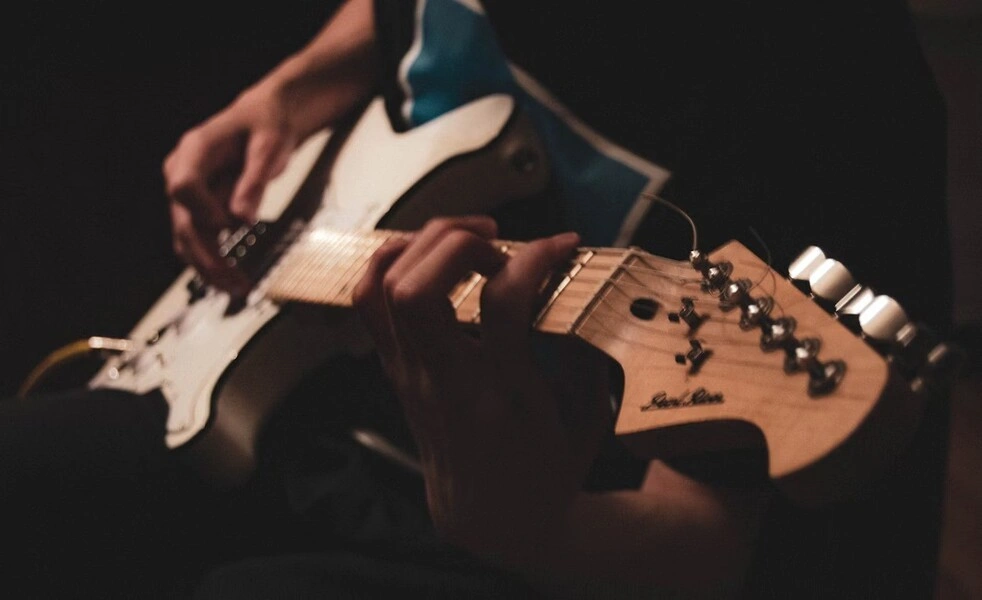
Fretting is the act of pressing the strings down onto the guitar’s fretboard to change the pitch of the notes played. Proper fretting technique is essential for clean, precise sound production and overall playability
Plucking
Plucking refers to pulling or striking a string with a finger or pick to produce an individual note. This fundamental technique is used in many styles, from delicate fingerpicking to aggressive picking with a plectrum
Picking
Picking specifically involves using a pick (plectrum) to strike the strings, either individually or in groups. It is the most common method for producing clear, articulate notes in many styles, including rock, country, and metal
Fingerstyle / Fingerpicking
Fingerstyle, also known as fingerpicking, is a technique where the strings are plucked directly with the fingertips, fingernails, or finger picks, rather than with a pick. This style enables complex polyphonic textures, allowing the player to perform basslines, melody, and harmony simultaneously
Finger Plucking / Two-Finger Technique
This bass-specific technique uses the index and middle fingers to alternately pluck the strings. It is a foundational method for bass players, providing a steady, controlled rhythmic pulse
Muting
Muting is the technique of dampening strings with either the fretting hand or the picking hand to stop unwanted noise or to create percussive effects. Effective muting helps clean up playing, especially during fast passages or aggressive styles
Palm Muting
Palm muting involves resting the edge of the picking hand lightly on the strings near the bridge to produce a muted, chunky sound. It is widely used in rock and metal for creating rhythmic, percussive tones without fully muting the strings
Staccato
Staccato is the technique of playing notes short and detached by quickly muting or releasing them, creating a crisp, percussive effect. It contrasts with legato for rhythmic variety
Legato
Legato playing connects notes smoothly and seamlessly, often through hammer-ons and pull-offs, minimizing the use of the picking hand. It creates fluid, flowing lines commonly used in melodic solos
Hammer-on
A hammer-on is a legato technique where a finger sharply presses onto a fret to sound a note without picking it. This allows for smooth, connected note transitions and faster playing
Pull-off
A pull-off is the opposite of a hammer-on, where a finger pulls away from a fretted note to let a lower note ring out without being picked. Pull-offs enable fluid, fast passages and expressive phrasing
Slide
Sliding involves moving a fretting finger along a string from one fret to another, creating a smooth transition between notes. It adds expressiveness and is commonly used in blues, rock, and country styles
Bottleneck
Bottleneck is a specialized form of slide guitar technique where a glass or metal tube, often a bottle neck, is worn on a finger and used to glide over the strings. It produces a distinctive, vocal-like sound and is closely associated with blues music
Bending
Bending is the act of pushing or pulling a string sideways on the fretboard to raise its pitch. This expressive technique adds emotion and vocal-like qualities to solos and riffs
Vibrato
Vibrato involves rapidly oscillating the pitch of a note by rocking the fretting finger back and forth. This subtle modulation enriches the tone and adds warmth and personality to sustained notes
Rake
A rake is a picking technique where the strings are quickly brushed or “raked” across in a muted state before striking a target note. It adds a rhythmic buildup and punch to lead lines
Dead Note / Ghost Note
Dead notes, or ghost notes, are muted notes that produce a percussive “thump” or rhythmic sound rather than a clear pitch. They are often used to add groove and dynamics in funk, reggae, and other rhythm-heavy styles
Power Chord
Power chords are simplified chords consisting mainly of the root and fifth notes, sometimes with an octave. They are widely used in rock and metal for their strong, aggressive sound and ease of movement
Double Stop
A double stop involves playing two notes simultaneously, often used in blues and rock solos to add harmonic interest and punch
Arpeggio
An arpeggio is the playing of the individual notes of a chord sequentially rather than all at once. Arpeggios are a fundamental element in melodic soloing and accompaniment
Harmonics
Harmonics are bell-like tones produced by lightly touching a string at specific points, causing it to vibrate in segments, creating a soft and delicate sound
Artificial Harmonics
Artificial harmonics are created by fretting a note with one hand and lightly touching the string with the other hand’s picking finger to produce harmonic overtones
Pinch Harmonics
Pinch harmonics are produced by catching a string with the pick and thumb simultaneously, generating a high-pitched squeal commonly used in rock and metal
Harp Harmonics
Harp harmonics combine fretted notes and open-string harmonics to create complex, harp-like sounds
Tapped Harmonics
Tapped harmonics involve tapping on the string at specific fret points with a finger from the picking hand to generate clear harmonic tones
Alternate Picking
Alternate picking is a fundamental picking technique that alternates downstrokes and upstrokes to increase speed and efficiency
Tremolo Picking
Tremolo picking is the rapid repetition of a single note using alternate picking, often used to build tension and excitement
Sweep Picking
Sweep picking uses a continuous, smooth picking motion across multiple strings to play fast arpeggios cleanly and efficiently
Hybrid Picking
Hybrid picking combines using a pick and fingers simultaneously, allowing for intricate patterns and dynamic control. This technique includes chicken picking, a style popular in country music characterized by sharp, percussive notes
Economy Picking
Economy picking blends alternate and sweep picking to minimize pick movement and increase playing efficiency
Percussive Hits / Body Taps
Percussive hits and body taps use the guitar body or strings as a percussion instrument, adding rhythmic elements to playing
Travis Picking
Travis picking is a fingerpicking style featuring steady alternating bass notes combined with syncopated melody notes, named after country and western music singer-guitarist Merle Travis
Percussive Fingerstyle
Percussive fingerstyle integrates hitting the guitar body or strings with fingerpicking to create rhythmic, drum-like effects
Classical Tremolo
Classical tremolo is a rapid, repeated picking of a single note using fingers, common in classical guitar repertoire to create a sustained effect
Boom-Chick
Boom-chick is a rhythmic pattern alternating a bass “boom” note with a higher “chick” strum, common in country and folk music
Tapping
Tapping is the technique of hammering onto the fretboard with the picking hand fingers to produce notes without picking
Two-Handed Tapping
Two-handed tapping extends this concept by using fingers from both hands on the fretboard to play complex, fast passages
Whammy Bar / Dive Bomb
The whammy bar, or tremolo arm, is used to bend the pitch dramatically, producing dive bombs and other expressive effects
Volume Swell
Volume swell uses the guitar’s volume knob or a pedal to gradually increase the volume of a note, creating a smooth, swelling sound similar to a violin
Feedback
Feedback is the sustained or distorted sound caused when the guitar’s pickups capture the amplified sound from the speakers, often used creatively in rock music
Chugging
Chugging is a heavy, rhythmic playing style using palm-muted notes to create a percussive, chunky sound common in metal and hard rock
Pick Scrape / Scratch
Pick scrape or scratch is produced by dragging the edge of the pick along the strings or frets, creating a gritty, scratching sound
Slap
Slap is a bass technique where the thumb strikes the strings to produce a sharp, percussive sound
Pop
Pop involves pulling the bass string away from the fretboard sharply with a finger, creating a snapping sound used in funk and slap bass styles
Read Next – Guitar Sound and Tone Glossary